Just when you were fully enjoying the blissful simplicity of summer, it’s already time to do a 180-degree turn. That’s right — it’s back to school, back to schedules, back to sports and other activities, and back to packing school lunches.
If you’re anything like me, packing lunches does not top your list of favorite daily tasks. If you have a child who’s a selective eater or has multiple food allergies, the task may be downright challenging. This Note offers a few suggestions to make packing school lunches a bit less complicated.
Keep it Simple
The MyPlate icon from the USDA is useful as a guide for planning meals, and especially for lunch in particular.
Start with fruits and veggies — that’s half the lunch.
Add low-fat milk or soy milk to drink (flavored milks as a treat, only on occasion). Try to avoid juices and other sweetened beverages.
Include one serving of grains (whole grain, preferably).
Finish with one serving of lean protein.
Use the lists here to mix and match lunches that are both appealing and nutritious…
Fruits
Vegetables
Grains
Proteins
Lean turkey or chicken breast
Hummus or other bean spread
Nuts, peanut, or other nut butter
Low-fat cottage cheese or yogurt
Slice cheese or string cheese
Soybeans or other beans
Hard-boiled egg
Construct a Healthy Lunch
Here are a few examples to choose from…
Sample lunch #1
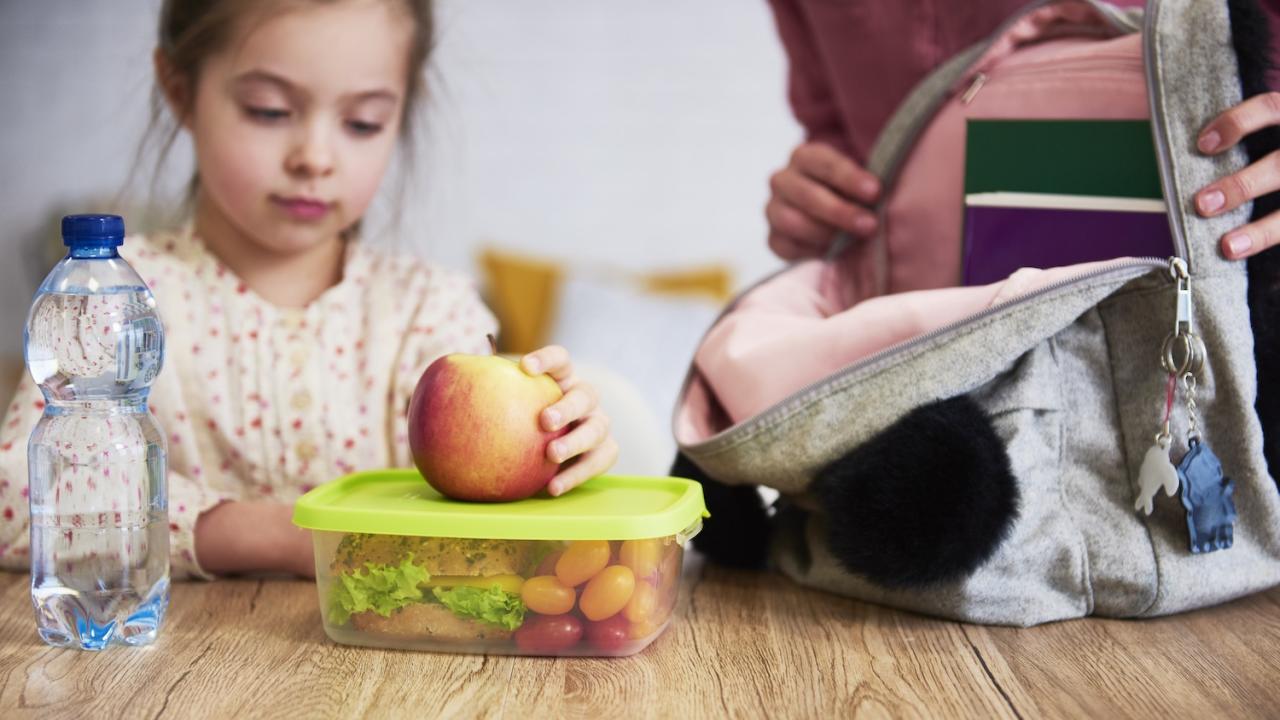
Turkey & cheese wrap
Baby carrots
Sliced apples
Low fat milk/soymilk
Sample lunch #2
Sample lunch #3
Hummus/Pita
Cheese stick
Cubed melon
Low-sodium V-8
If you want to increase the likelihood that your children will actually eat their lunch, invite them to choose and pack a few items they would like, aiming to make snack treats an occasional rather than everyday item.
A Word About Safety
A 2011 study showed that by the time they are eaten, many school lunches have reached an unsafe temperature and may pose a risk for food-borne illness. To keep foods at an appropriate temperature, be sure to use an insulated lunchbox or bag, and keep cold foods cold by packing them with two ice packs or a frozen water bottle. You can also freeze certain items, such as yogurt, so it helps keep everything cold and is thawed and ready to eat by the time lunch rolls around.